How Boy George’s AI Song Turned Into the Biggest Controversy of His Career
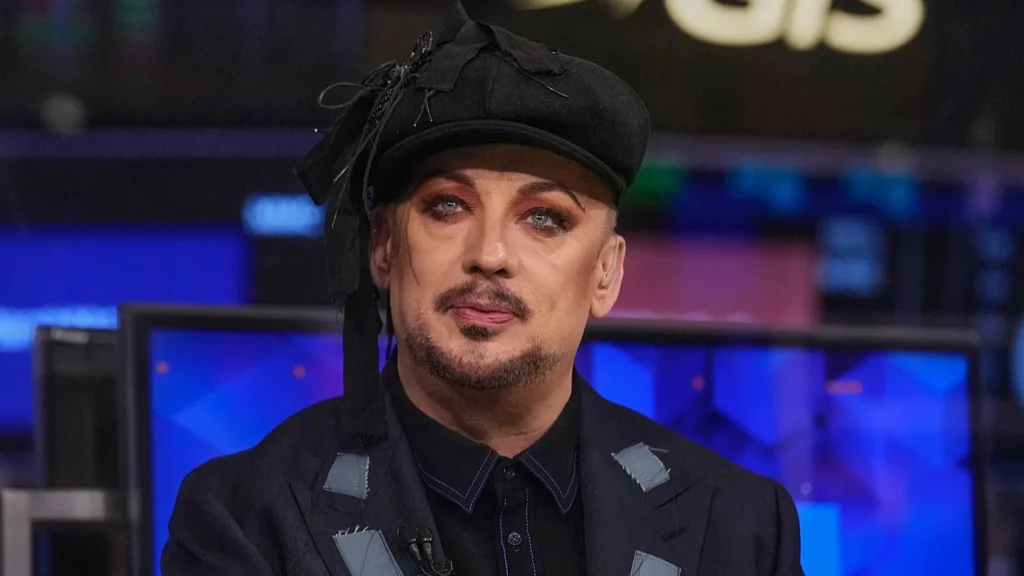
Boy George has never been a stranger to controversy, but even by his standards, the fallout from his 2026 single “We Will Dance Again” has been extraordinary — costing him a West End role, a working relationship with his label manager, and goodwill from parts of the music industry that had stood by him for decades.
The trouble started when the 65-year-old Culture Club frontman posted an unreleased pop-reggae track to social media with the caption “Shalom.” The song, whose Hebrew title translates to “We Will Dance Again,” takes an unapologetically pro-Israel stance on the war in Gaza. Its lyrics directly confront critics of Israel’s military campaign, at one point framing accusations of genocide as simply the price of a justified response to attack. Given that a United Nations commission had already concluded Israel was committing atrocity crimes against Palestinian children, the song landed like a grenade the moment it went public.
What turned a political statement into a full-blown scandal was how George made it. He openly admitted the track was created with AI assistance, describing the process as “AI for good” and insisting that working with a human collaborator would have gotten in his way. He maintained that the lyrics and melody were entirely his own, but the admission that artificial intelligence had shaped the production only added fuel to a backlash that was already burning over the song’s politics.
The consequences arrived quickly. Just days after the song surfaced, Boy George’s manager announced he was withdrawing from a planned run as King Herod in the West End revival of “Jesus Christ Superstar” at the London Palladium, a role he was due to begin in early August. His manager framed the decision as an act of respect toward the production rather than a retreat from controversy, but the timing left little doubt about the real cause. Actor Richard Armitage, already part of the show’s rotating cast in the role, absorbed the additional dates.
The fallout didn’t stop at the theatre. Bandcamp removed the song from its platform along with George’s artist profile, citing its policies on AI-generated content. George responded furiously, accusing the platform of bowing to what he called antisemitic pressure — a claim that only widened the rift between him and much of the industry watching the saga unfold. He also lost his label manager, who reportedly refused to release the track at all, forcing George to distribute it independently.
Perhaps the most eyebrow-raising moment came when George suggested he would fire any member of his own band who refused to perform the song live with him. Sources close to the situation say several musicians had privately expressed discomfort about playing a track built around such a charged and divisive message, and George’s response signaled he had no intention of softening his position to keep the peace within his own group.
The controversy also reopened old wounds, with critics pointing back to an earlier dispute in which George falsely claimed pop star Dua Lipa had said Israel should be wiped off the map — a claim that was never substantiated and that further damaged his credibility heading into this latest storm.
Whatever one makes of the politics involved, the episode has become a case study in how quickly an artist’s use of AI can amplify an already combustible topic. George has framed himself as an artist unafraid to lose work over his convictions. His critics see something closer to a self-inflicted wound, made worse by a creative shortcut that many in the industry are still deeply uneasy about. Either way, “We Will Dance Again” is likely to be remembered less for its melody than for everything it set off around it.