
Accordions and Blast Beats: How Varang Nord Perfected Their Sound on Mygla
I’ve seen many bands use folk elements as a gimmick; however, Varang Nord’s Mygla treats the accordion as a genuine melodic force. This ambitious 10-track release balances breakneck death metal intensity with orchestral arrangements and experimental, psychedelic textures, proving that traditional Baltic sounds belong on the modern metal stage.
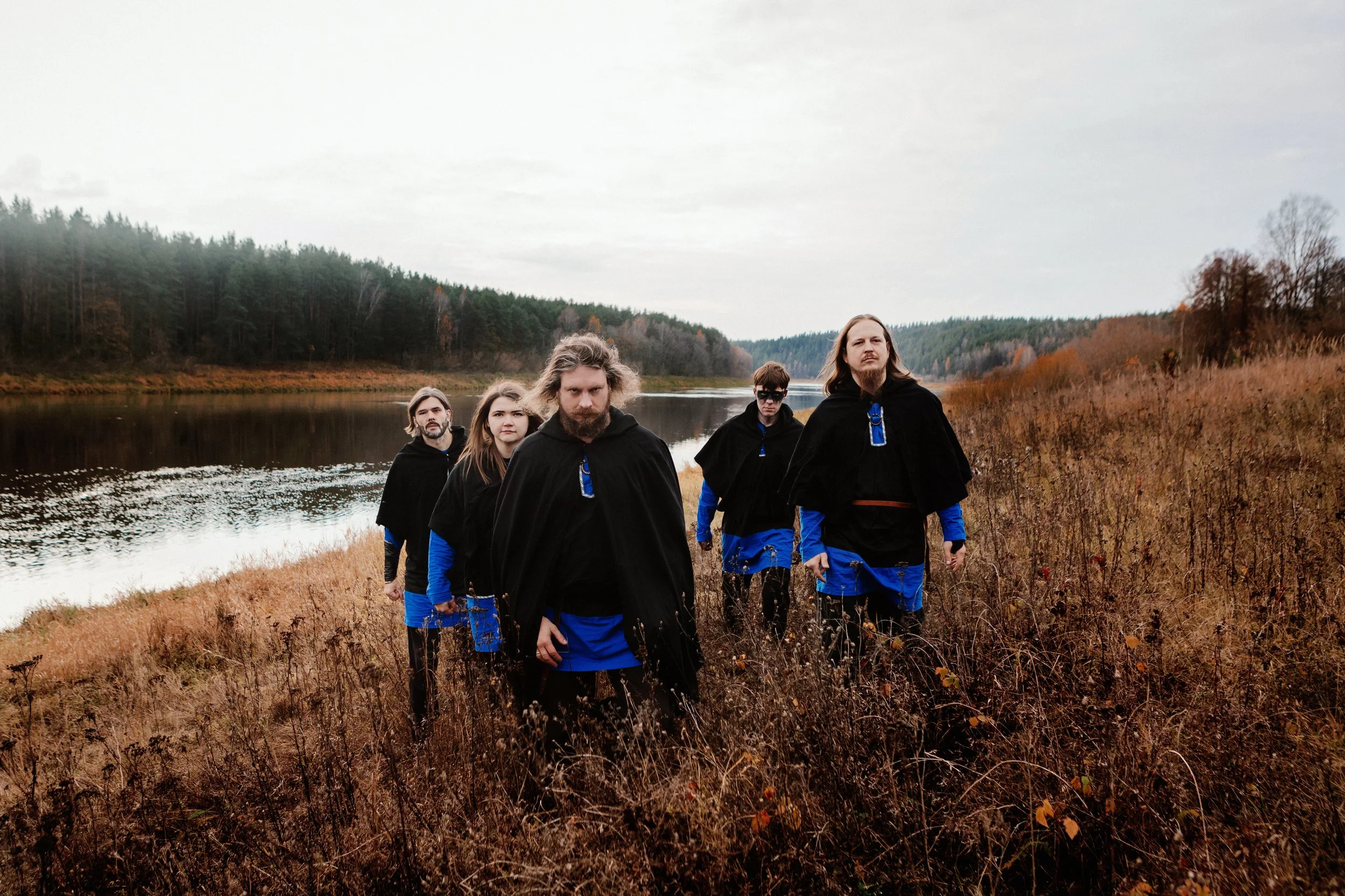
Photo by Diana Pamakste
From the shadowy forests of Latgale, Latvia comes Mygla, the latest full-length offering from
Varang Nord—a band that has spent over a decade perfecting their unusual marriage of
crushing death metal and traditional folk accordion. This is their sixth release and arguably their
most ambitious, drawing from both their darkest personal moments and the ancient mythology
of the Baltic region.
The Sound
The first thing that struck me about Mygla is how seamlessly Varang Nord integrates the
accordion into extreme metal. This instrument serves as a genuine melodic
force that creates atmospheric layers impossible to achieve with guitars alone. The opening track
"Mygla" immediately establishes this dynamic: cinematic strings give way to heavy, rhythmic
guitars while Jeļena Kaļniša's accordion weaves through the darkness like a thread of ancient
memory.
Throughout the album's ten tracks, the band demonstrates remarkable range. "Ašņa Ausma"
launches at breakneck speed, proving that folk instrumentation can keep pace with blast beats
and death metal intensity. The production by Gints Lundbergs deserves special attention—every
element sits perfectly in the mix, from Dmitrijs Suhanovskis's relentless drumming to Sergejs
Karševs's dark, rumbling bass, with Yuri Borin's orchestral arrangements adding cinematic sweep- none of this ever overwhelming the core aggression.
Standout Moments
"Trokais Pļāgurs" featuring Janis Dregeris offers an intriguing stylistic shift, with power metal
vocals cutting through Varang Nord's typically growled delivery. But it's "Moldu Dīvs" that may be
the album's emotional centerpiece—opening with solo accordion before descending into what
can only be described as a storm of ancient fury. The track captures something primal about
resisting cultural erasure, with the music itself becoming an act of defiance.
Then there's "Shrooms," featuring Alex Under, which takes a sharp left turn into experimental
territory. Clean, almost psychedelic vocals blend with bent chords and strange instrumental
textures, creating a disorienting, hallucinogenic atmosphere that's utterly unique in the metal
landscape. It's simultaneously the album's most accessible and most bizarre moment.
The closing epic "Ziemeļu Ugnus" stretches past six minutes, building from black metal intensity
to a quiet, cinematic denouement around the 3:33 mark. Strings (or string-like orchestrations)
emerge from the chaos, accompanied by Hollywood-film-worthy percussion. The final minutes
feel like watching longships disappear over the horizon—a perfect conclusion to an album
steeped in ancient warrior imagery.
Cultural Weight
Varang Nord writes and performs in Latgalian, a language spoken in eastern Latvia that carries
deep cultural significance. The lyrics throughout Mygla reference Baltic pagan deities
(particularly Pērkonsis/Perkūnas, the thunder god), ancient battles, and the tension between old
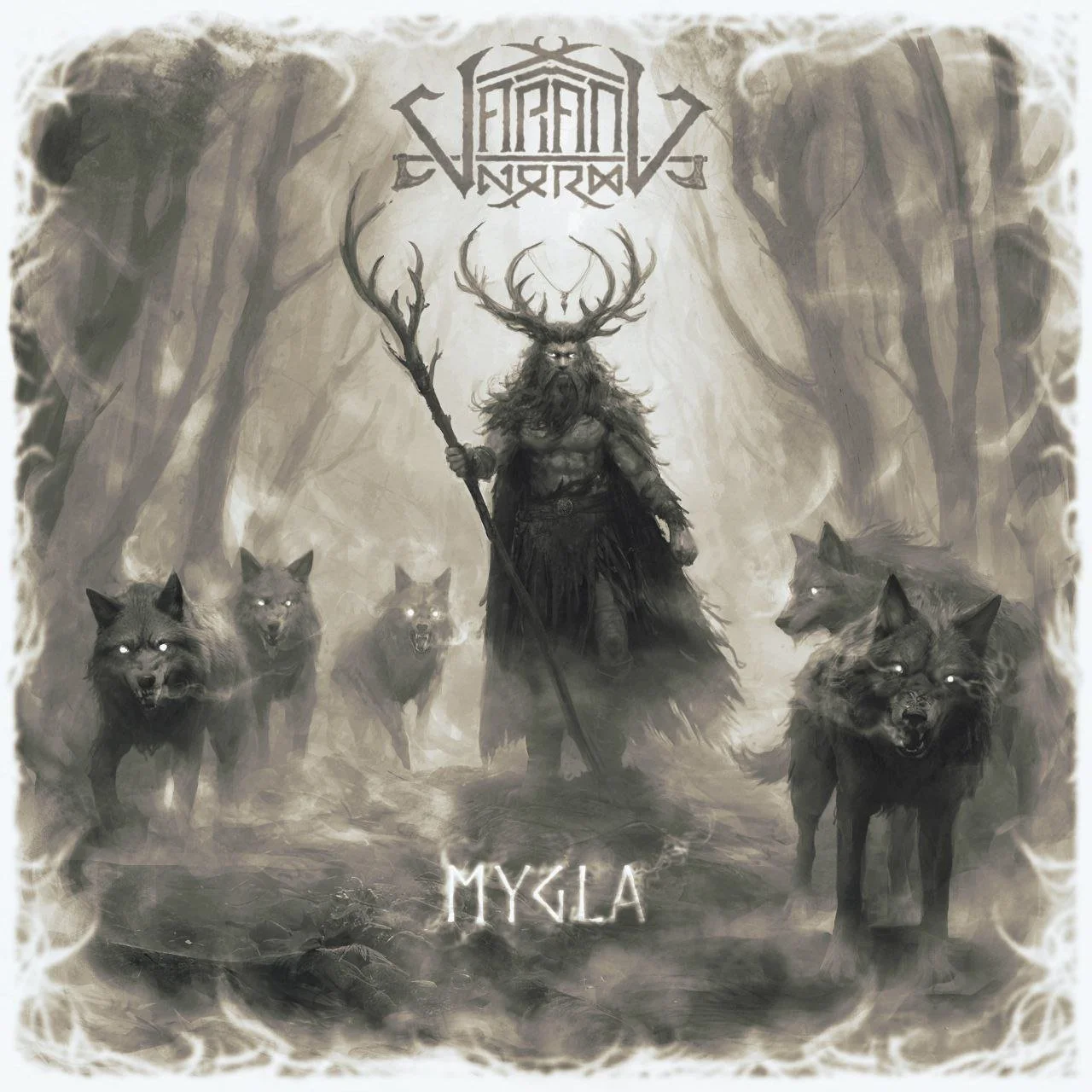
''Mygla'' Album Cover by Arthur Urbanovich
beliefs and imposed religion. "Dīvu Laiks," featuring Lesley Knife of Gods Tower, explicitly
addresses the passing of old gods—a melancholic meditation on cultural transformation.
This isn't Viking metal cosplay. There's genuine weight here, a sense that these songs
connect to something older and more rooted than typical pagan metal fantasy. Whether
depicting battlefield carnage in "Tymsa īt" or the disorienting journey through fog in "Pūrs," the
band taps into specific regional mythology and history.
Performance and Production
The technical execution throughout Mygla is impressive. The guitar work features clever use of
unusual chords and subtle note choices that add darkness without venturing into dissonance.
The rhythm section is powerful and precise, capable of thrash intensity one moment and rolling,
wave-like grooves the next. Guest vocalists integrate seamlessly—particularly Lesley Knife's
haunting delivery on "Dīvu Laiks."
The album benefits from careful dynamic variation. While there's plenty of full-throttle
aggression, Varang Nord understands the value of space and atmosphere. Acoustic interludes,
cinematic buildups, and strategic use of orchestration prevent listener fatigue across the
42-minute runtime.
Final Thoughts
Mygla represents Varang Nord at their most confident and accomplished. The band has found
their niche—not just pagan folk metal, but specifically Latvian pagan folk metal—and they've
pushed it to new creative heights. The album's varying moods reflect the diverse experiences
that went into its creation, resulting in work that feels genuinely personal rather than formulaic.
For fans of folk-inflused extreme metal acts like Moonsorrow, Arkona, or Finntroll, Varang Nord
offers something fresh: a band that honors tradition while experimenting fearlessly, that sounds
both ancient and modern, that can make you headbang and contemplate mortality in the same
breath.
After experiencing Mygla myself over a strong cup of coffee this morning, I was totally ready to
grab a sword, board a Drakkar, and sail into the mists of history
