
I Forgot to Pay My Distribution Bill & My Music Disappeared.
Here’s What I Learned
I was sitting with other VIP staff in the backstage cafeteria. My 2nd or 3rd time working as an assistant in VIP, and I'd also just started putting my own music out there- not metal- but a folk Appalachian song I'd written with a guitarist I'd known since high school. Dennis Hartley. A guy everyone wanted to be friends with back then. He was incredibly talented. Years later, he was collaborating on the first song I'd ever dared to sing in my own voice.
With that song just out, Kiko Loureiro walked over to join us for lunch, and suddenly I was feeling like my small assistant title was overshadowed by the desire to feel appreciated as another artist at the table. I knew they'd heard my music, and everything I was singing, painting or writing was online now. Open to criticism. Kiko encouraged my music and pushed me to make more. At that point, I couldn't afford to lose the stamina I was building.
“A year later I woke up one morning and all my music had vanished from the internet”
Mockingbird Messiah, the song Dennis and I had built together, gone. Why? I had forgotten to pay my distribution bill. The Guitar Academy work was still active. I was writing marketing mail for someone who'd just encouraged me as an artist, and now my own art had vanished from the internet. I wondered if it had even been noticed. I felt like an idiot.
I couldn't ask Kiko how to fix this. I'd been brought in as someone who supposedly knew what she was doing — a seemingly confident, witty artist, an equal — and I didn't want to revoke that. I couldn't afford to not know in front of people like him. I was too afraid to ask. So I went to my laptop and dived into about a hundred YouTube tutorials — lost until about 4 a.m.
Nobody Hands You Distinctions
It turns out that most music distributors operate on the assumption that you understand the consequences of a missed payment. The websites promise permanence. The fine print quietly assumes you already know what that costs. Nobody hands you the distinction. You're expected to know, as a brand new indie artist, arriving on the scene with industry knowledge that nobody told you about.
But in my impatience to get music online, I just heard "Pay us once and get your music up everywhere!" I never paid attention after that. I was one of those eager, overexcited people who didn't see the fine print. Suddenly, I lived in this thrilling new digital age that allowed anyone to put their art everywhere in a couple of days. It was magical. And then it wasn't.
After a few stressful nights on YouTube, I found one distributor that didn't take your music down when a payment slipped. It was called LANDR. I was paying attention this time — if I cancelled or missed a payment, they'd take a small royalty percentage rather than pulling everything down. I could handle that. For someone who just watched everything she worked on disappear overnight, that felt like the difference between a landlord and a home.
After signing up and a week of getting things running properly, I started realizing this place was more of a creative ecosystem than a typical distributor. "Wait, I could make money here…"
Music doesn't pay much in this new world. Multiple income streams aren't optional for independent artists, they're just the reality of the lifestyle. So I posted my profile selling original artwork for album covers, and brought in some extra money. It's not steady, but the jobs come in, and the reviews are real. And that was just one door.
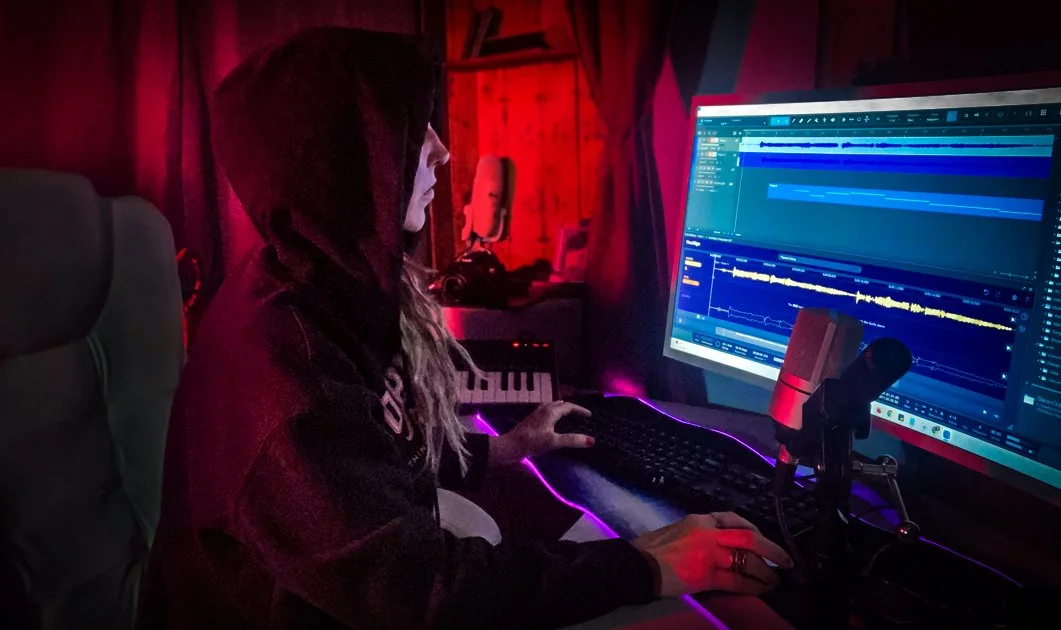
Fumbling around in LANDR's ecosystem has been interesting. As a singer trying to get my vocal layers to sit right, I ended up living in their VocAlign plugin. As a newbie producer, I played around with plugins and samples there as sort of a scratch pad until I had a better idea of what I was doing.
Here's what I learned from this entire experience: other people probably never even noticed my music was offline. My new friends were on tour. They were busy. They had their own music, their own deadlines, their own private fears that they weren't telling anyone either. The audience for my humiliation turned out to be one person, sitting alone at a laptop at 4 a.m., and that person was me.
That's what the old story does to independent artists. It weaves that illusion in your head that looks like you're not ready yet, you don't know enough yet, you need someone else to give you validation as an artist. It makes the simple mistake of a missed payment feel like being a fraud. And it turns that mistake into evidence that you never should have tried.
“I don’t believe that anymore.”
What I believe now is this: the gatekeepers I was terrified of were never watching what I was doing. The ones who were watching — Kiko, Dennis, the people who actually knew my work — encouraged me. And the infrastructure I needed to keep going wasn't behind some velvet rope. It was a subscription I could afford, on a platform I found at 4 a.m., after a few bad nights and a hundred YouTube videos.
That's what creative independence actually looks like. If you're an independent artist who's tired of feeling like you need permission to exist — to release, to distribute, to take up space in your own way — LANDR is where I'd point you. Not because it's perfect. The support can be slow, and you'll probably have to figure some things out on your own. But your music won't disappear because you forgot to pay a bill. And once you've settled, you might find — the way I did — that you walked in through one door and ended up somewhere much bigger.
