Reclaiming the Self: An Interview with Demetra’s Scars
exc-6a3aed100c109349d2590a31
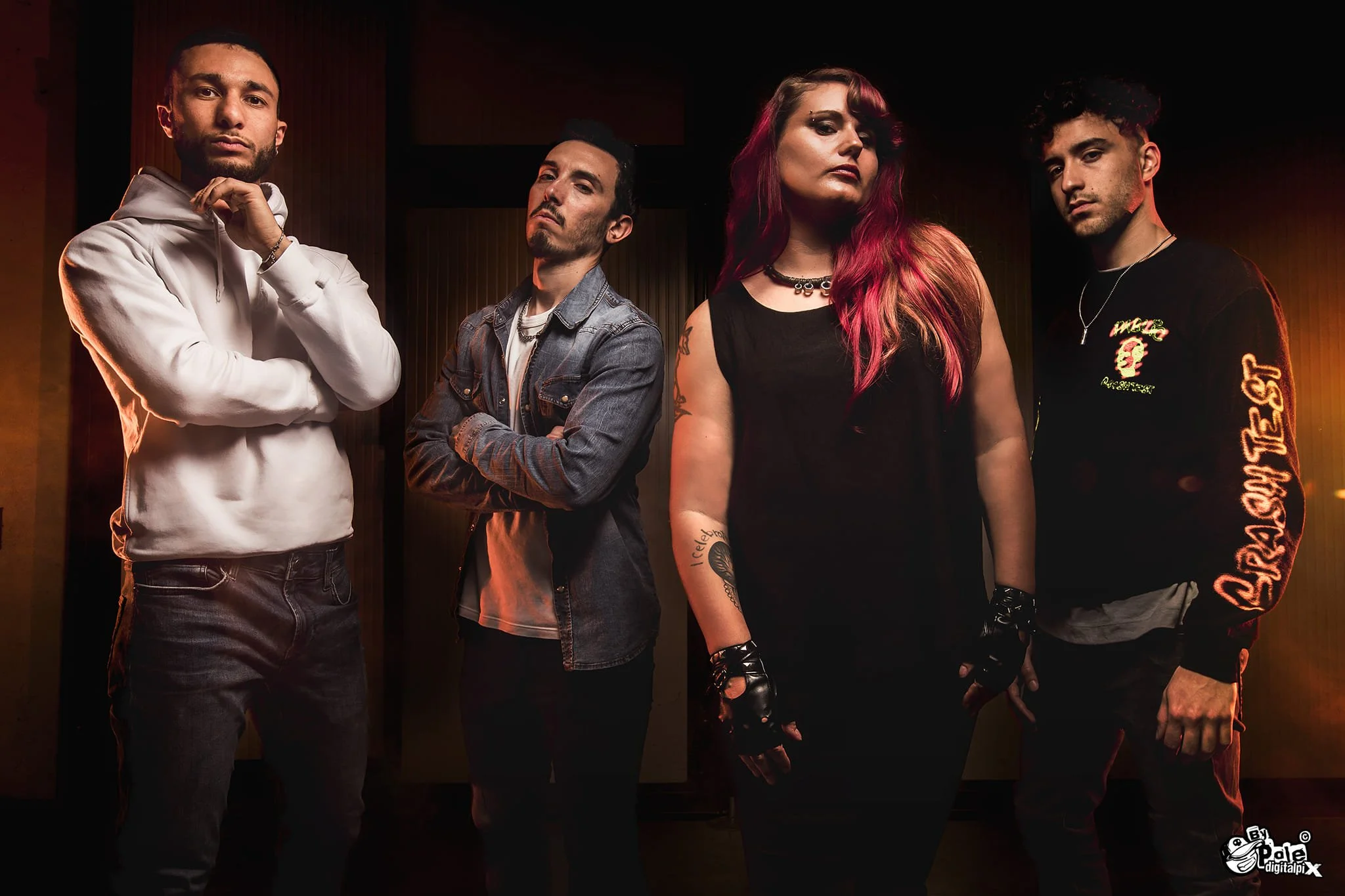
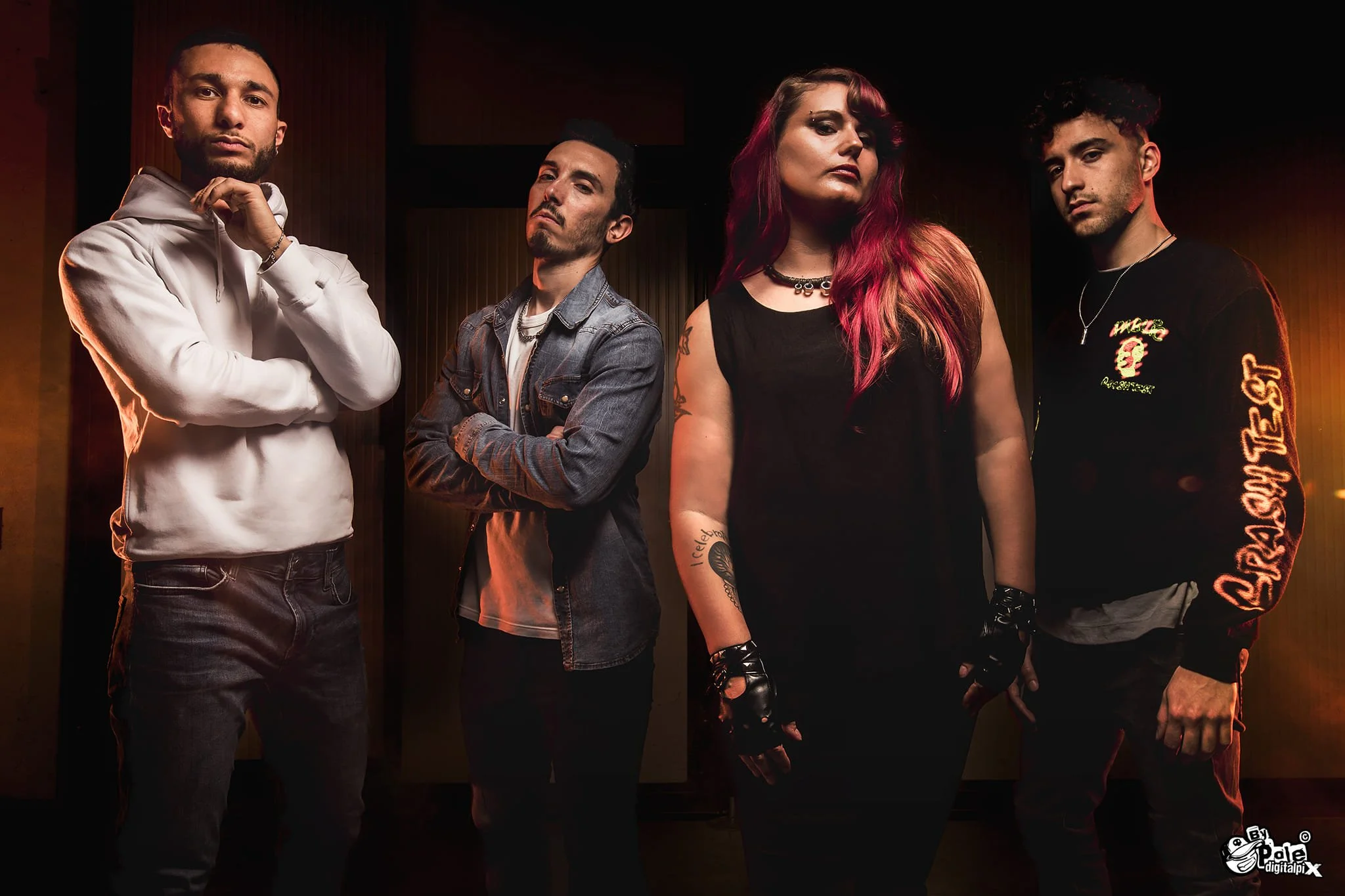
The most dangerous thing about modern conditioning isn’t that it forces us to comply; it’s that it makes us forget we are complying in the first place. On their debut full-length, Born Unbroken (released June 19th, 2026), Modena, Italy’s Demetra’s Scars have staged a systematic, sonic revolt against the globalized machinery of modern life.
Tracked by Marco Malavasi at Sonic Design and polished by Bruno Stella, the album’s heavy, groove-laden alternative metal serves as the sonic architecture for a much deeper psychological audit. Rather than hiding behind standard genre tropes or theatricality, vocalist Denise “Didi” Pellacani and guitarist Samuele Casari treat heavy music as a tool for literal deprogramming. It is an aggressive, introspective 33-minute reminder that human essence isn’t something to be manufactured or approved by an institution—it is something to be reclaimed.
We sat down with Didi and Samuele to dissect the architecture of Born Unbroken, the illusion of the modern ego, and the price of true artistic autonomy.
Elevar Magazine: You toured with Jinjer and Infected Rain back in 2018 before you’d even released your EP. That’s a massive stage for a young band. How did that experience shape what Demetra’s Scars became?
Samuele Casari: Hi Elevar Magazine! Oh yes, we had the honor to play with Jinjer in August 2018, two months later with Infected Rain, and again with Jinjer in August 2022. At that time we were very young and we didn’t realize this thing so well. It all started with our first single “Your Only Escape” in March 2017. After this single, some producers and booking agents decided to put our band in those gigs. This experience helped us to grow, and after these concerts, we changed some structures, riffs, vocals, and lyrics of our tracks to make them more modern metal and “fresh”. It was an amazing experience.
You’re currently unsigned by deliberate choice. With the way things are changing, do you believe the traditional record label is even necessary anymore?
Samuele: Exactly, at the moment we are unsigned and that’s a deliberate choice. There are so many metal bands in Italy and awesome musicians, but at the same time, we are probably one of the countries with the fewest concert venues and the smallest crowds for supporting underground music. This situation gives the key to a label or agency to take total control of the live scene, and if you’re unsigned, it’s very hard to play.
We don’t want to pay a fixed price every month for something we can do by ourselves. In the last years, we’ve tried to bring our music to Europe. We played two times in Germany, and we are so happy because we are going back in two weeks—this is the way for us. Maybe if one day a label gives us a real contract with guarantees, we’ll consider it.
“People are much harder to manipulate when they’re independent and aware of their own potential.” — Didi (Denise Pellacani)
EM: Didi, in some corners of the heavy music scene, there is still an intense rigidity toward vocalists, particularly regarding expectations of gender and image. How do you navigate that framework?
Didi: First of all, I should point out that in some corners of the metal scene, I’ve noticed a certain rigidity toward singers in general, regardless of whether they’re men or women. The attitude can be summed up as: “Either you do exactly what everyone else is doing—screams, growls, dark lyrics, the same rhythms over and over—or we don’t want you in the club.”
That said, I’m fully aware that the way audiences react to my presence is often shaped by all the expectations—implicit or explicit—that society places on women. According to mainstream standards, a woman is seen first as an image and only second as an artist. She’s expected to conform to certain ideals, especially aesthetic ones. As a metal singer, you’re expected to be aggressive and bold in the way you dress, do your makeup, and move on stage, while still remaining attractive. You have to embody that “beautiful and damned” archetype, otherwise you’re not considered heavy enough.
If you don’t fit those expectations, you’re frequently overlooked. I know this is an old story, but our lives are still heavily shaped by it. Clearly, it hasn’t been discussed enough. I’m perfectly aware that I don’t fit the character people expect from a female performer or a metal singer. My answer is always the same:
“Now that you’ve told me I’m not good enough, do you feel better? Good for you. In the meantime, I’ll keep doing whatever I want. And if you don’t like what you see, look somewhere else. I don’t need you in my audience.”
“Fake Skin” is a massive track on the album. Lyrically, it feels like it touches on a collective struggle with performing an acceptable version of oneself. How deeply is that rooted in lived experience?
Didi: It’s definitely connected to what we’ve just been talking about, but it’s also something that can be found in every aspect of life. In that sense, it comes entirely from real experience. However, I don’t see it only in my own everyday life; it’s a collective phenomenon that goes far beyond individual experiences.
The social system we live in is built around an idea of what a person should be rather than who they naturally are. You sacrifice most of your time working, and you’re expected to pretend you’re fine with it, otherwise you’re labeled lazy or entitled. You’re expected to be aesthetically attractive at all times, otherwise your value as a person is questioned. That’s how people end up spending money on gym memberships, diets, treatments, and endless products promising self-improvement. You’re expected to keep up with trends and approved opinions, otherwise you’re marginalized or attacked. You’re never allowed to appear vulnerable.
This phenomenon was dramatically amplified first by television and later by social media. Mass media projects an unrealistic image of what a person should be, and we all feel pressured to conform to it so we won’t be judged, abandoned, or exposed. People are much harder to manipulate when they’re independent and aware of their own potential. That’s why we’re constantly encouraged to believe we’re incomplete. We’re persuaded to hand over enormous amounts of power to larger institutions in exchange for the promise of being accepted and cared for. This mechanism has always been central to religion, and today the same kind of fanaticism can be found almost everywhere. Our new god is a standardized, globalized system.
“About a Man” stands out significantly. It offers a rare, highly compassionate deconstruction of the emotional armor and societal fictions imposed on men. What brought that song to life?
Didi: I have many close male friends, and some of them are incredibly intelligent and sensitive people. Seeing their struggles and the effort they’re forced to make just to navigate the world has definitely affected me. But the song isn’t only about them—it’s about a much broader reality.
The constant pressure to perform in order to avoid being judged is exhausting. A man isn’t supposed to show affection—especially toward another man. He’s not supposed to admit that he’s struggling or afraid. He’s not supposed to show sadness, and heaven forbid he sheds a tear, because the insults start immediately. He’s expected to be the classic fairy-tale prince: strong, masculine, preferably tall, physically imposing, and ready to face any challenge without hesitation. Well, that’s not a human being. That’s an alien. I don’t feel understood by someone like that, and I don’t feel that I have anything in common with him.
People often talk about the social traps and stereotypes imposed on women—and in my opinion, we haven’t even begun to question some of the most damaging ones. But we talk far less about what men go through. Many men aren’t even used to looking at these issues because they’ve been taught that they must always be successful, active, strong, and productivity-driven. That mindset leaves very little room for self-reflection. I genuinely feel sorry about that, so I wrote a song about it.
Born Unbroken explores the tension between our truest essence and inherited programming. Did you sit down with this conceptual blueprint in mind, or did it manifest organically through the writing process?
Didi: I don’t remember there being a specific moment when we sat down and explicitly said, “This is going to be the theme of the album.” The truth is that my values and beliefs are very evident in my lyrics, and I think the direction these songs would take was clear from the very beginning. The theme emerged naturally because it’s already deeply embedded in the way I write and in the subjects I’m interested in exploring. Nothing about it felt forced or carefully constructed. It was simply the most honest expression of who we are and what we wanted to talk about.
The Verdict
Born Unbroken functions as an essential antidote to modern, algorithm-driven metal. By focusing their sound on heavy grooves and their lyrics on absolute existential liberation, Demetra’s Scars have delivered a record that feels completely untamed. They are a vivid reminder that the first step toward true autonomy is refusing to wear the armor society hands you.
Born Unbroken is out now independently on CD and digital formats.